
the celestial enquiries · no. 02
consider the moon
eight phases; an unreasonable number of 8s
An illustrative phase dial, not tonight’s sky. Surface rendering: NASA’s Scientific Visualization Studio, using LRO data. Shading is schematic; surface orientation is held fixed.
If the archive can recover the sunlight at every encounter, it can ask what the Moon was doing, too. The committee has considered it. The Moon has offered no comment.
the moon has not been implicated
There is no convincing lunar association in this archive under the tests below. That is not proof of no effect; it is a refusal to mistake a suggestive shape for a finding.
Illumination versus daily count: r = 0.013. Lunar phase explains 0.16% of the count variation remaining after calendar-month differences. Adjusted randomisation p = 0.94.
What the test could hear. It would have noticed a lunar rhythm only if that rhythm moved the daily rate by roughly ±70% around its monthly mean. Anything subtler is not ruled out; it is unheard.
an archive in eight phases
The phase belongs to the instant of the encounter, wherever on Earth it happened. Choose a Moon to open its drawer.
during the full-moon phase
four encounters, spread through the archive
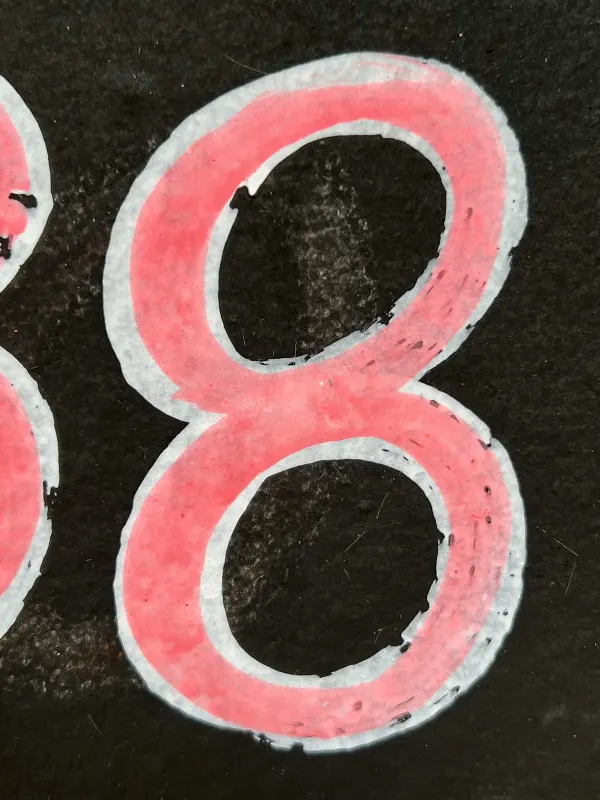 2024-01-2599.3% illuminatedMoon below horizon · -76.3°
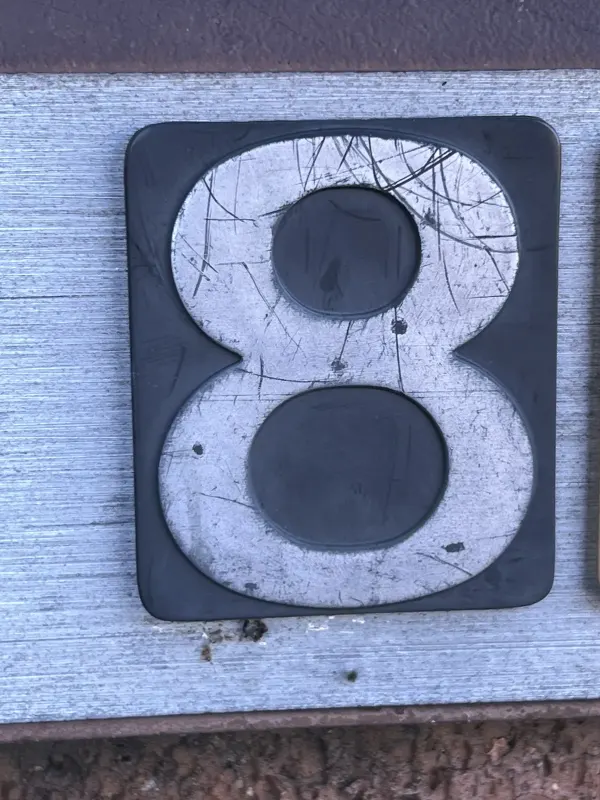 2025-07-1199.7% illuminatedMoon below horizon · -14.1°
 2025-11-0796.3% illuminatedMoon below horizon · -20.5°
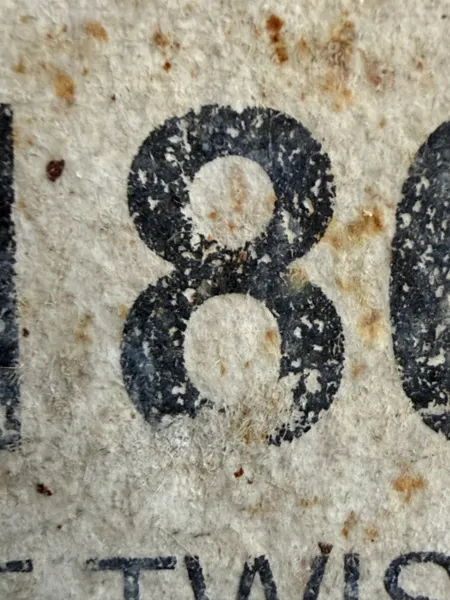 2026-09-2799.1% illuminatedMoon below horizon · -40.4°
“Full moon” here is a 45° phase bin centred on opposition, not only the exact instant of fullness. Phase describes the Moon’s illumination, including in daytime or when it is below the horizon. The altitude beside each encounter is its modelled height above or below the geometric horizon; cloud and obstructions are unknown. Dates follow the camera’s local date where recorded. Discs are schematic, north-up.
On the first encounter. The museum’s very first 8 was captured during the full-moon phase: 25 January 2024, at 11:45 in Sydney, with 99.3% of the lunar disc illuminated. The Moon was below the horizon; the coincidence was waiting in the metadata. The committee records it without advancing it as an explanation.
count the days, not just the 8s
A phase can collect more 8s because it coincided with one extraordinary walk. The chart divides encounters by the calendar days available to each phase. Days without an archived encounter remain in the denominator.
UTC days, assigned the phase at noon. Dashed line: the archive’s overall daily average. This descriptive chart does not adjust for month or travel.
Per calendar day, the fullest drawer holds 1.9× the emptiest. Under the same month-shuffling null that ratio is typically 2.2× (95th percentile 3.4×): the drawers are filled more evenly than chance usually manages.
the numerical register
| Phase | Encounters¹ | Days | Active days | 8s / day² | 8s / active day² |
|---|---|---|---|---|---|
| new moon | 1,205 | 119 | 65 | 10.64 | 19.48 |
| waxing crescent | 819 | 120 | 74 | 6.59 | 10.69 |
| first quarter | 1,268 | 127 | 81 | 8.64 | 13.54 |
| waxing gibbous | 1,257 | 123 | 80 | 11.69 | 17.98 |
| full moon | 1,107 | 124 | 70 | 7.73 | 13.69 |
| waning gibbous | 1,364 | 125 | 77 | 11.70 | 18.99 |
| last quarter | 1,478 | 126 | 72 | 12.22 | 21.39 |
| waning crescent | 1,092 | 118 | 65 | 8.80 | 15.97 |
¹ Exact capture-time bins. ² Daily counts assigned by noon UTC phase; a few encounters near a phase boundary consequently fall in a different bin. An active day contains at least one timestamped encounter. Per-active-day averages condition on a successful day and are not encounter rates per hour of looking.
a full moon can be underfoot
Phase alone cannot tell us whether the Moon could illuminate a street. The museum also recovered its position above or below the horizon at 9,502 located, timestamped encounters.
Of 757 encounters with the Sun below −6°, 192 (25%) had a Moon at least 90% illuminated and above the geometric horizon. Replayed at the same places and clock times on every night of the project, the sky offered such a Moon 18% of the time. The 192 come from 35 nights; the busiest supplied 23. The committee records the excess without testing it. This is an opportunity for moonlight, not proof of it: cloud, buildings, indoor scenes and street lighting are not recorded, and nights cluster by travel and season.
consider the denominator
The archive records encounters, not every walk, every missed 8, or the time spent looking. A zero means “no encounter in this archive on this UTC day”. It does not mean the practitioner went out and found nothing. We can investigate recorded activity; we cannot estimate the Moon’s effect on the chance of noticing an 8 per hour outdoors.
on method
The input. 2024-01-25 to 2026-10-02, inclusive. 57 of 9,647 works lack a resolved UTC instant and are excluded. 9,426 timestamps come from the GPS clock; 164 from camera time plus its recorded offset. No timezone is guessed. Day boundaries are UTC for consistency across travel.
The sky. Skyfield with JPL DE421 computes apparent geocentric lunar phase: Sun–Moon ecliptic longitude difference, 0° new, 180° full. Eight equal 45° bins are centred on the named phases. Displayed illuminated fractions use Sun–Moon–Earth geometry. Local altitudes use exact private coordinates and a sea-level observer, with no atmospheric refraction or terrain correction. Exact coordinates are not published.
The test. Daily counts are fitted to sine and cosine of phase, with a separate intercept for every calendar month. The statistic is partial R²: the fraction of within-month variation captured by both phase terms together. A second endpoint tests whether a day contains any encounter. We circularly shift each month’s entire daily-count sequence by an independently sampled integer offset, refit, and repeat 9,999 times (seed 888). Counts and activity are shifted together.
Why this null. Shifts retain each month’s count distribution and much of its run structure, instead of pretending every photograph is an independent trial. Wrapping breaks one adjacency per month; the scheme does not preserve weekday alignment or control travel, weather, location or effort. It assumes shifts within a month are exchangeable under the null. These are exploratory tests, not a causal design.
| Endpoint | Partial R² | Shift p | Holm p |
|---|---|---|---|
| daily encounter count | 0.16% | 0.8290 | 0.9364 |
| day with any encounter | 0.31% | 0.4682 | 0.9364 |
Randomisation p = (1 + simulations at least as extreme) / 10,000. Holm adjustment covers the two endpoints above. A p-value is not the probability the Moon has no effect. The test targets a smooth once-per-lunation rhythm; it can miss narrow or twice-per-cycle patterns. No scan over alternative periods or favoured subgroups was used to select the headline.
What the test could hear. To learn the smallest lunar swing this test would have noticed, each day’s observed count is multiplied by 1 + A·cos(phase − θ) for a random peak θ, rescaled to the archive’s total, and put through the identical shift test. Power is the share of altered series that reach p < 0.05 on the count endpoint. On a grid from ±10% to ±100%, the smallest swing detected at least 80% of the time is ±70% (detection by swing: ±10%: 0%; ±20%: 0%; ±30%: 0%; ±40%: 9%; ±50%: 39%; ±60%: 75%; ±70%: 98%; ±80%: 100%; ±90%: 100%; ±100%: 100%). Because the alteration scales existing counts, empty days stay empty: it describes a Moon that changes the yield of a day out, not whether the practitioner goes out.
The drawers. The ratio of the fullest to the emptiest per-calendar-day drawer is 1.85×. Across the same 9,999 shifted series it has a median of 2.23× and a 95th percentile of 3.44×; the share of shifted series at least as uneven as the archive is 0.80.
What the sky offered. Each dark-sky encounter is replayed at its own place and clock time on every day of the project; replayed instants that are not also dark are dropped, leaving 627,494 of them. The shares of those with the Moon above the horizon, and with a Moon at least 90% illuminated above the horizon, are the baselines quoted in section 03. The baseline conditions on where and when the museum is out after dark, not on the nights it found something. It is descriptive; no test is attached.
A simpler correlation. Pearson’s r compares daily count with (1 − cos phase) / 2 at noon, an illumination proxy that combines waxing and waning. Descriptive annual checks: 2024: r = +0.021; 2025: r = +0.030; 2026: r = -0.033. These are not additional significance tests.
Audit trail. Rebuilt 2026-10-03; the nightly ingest refreshes this page. Summary JSON · daily analysis data · reproduce the tests. The summary records input hash, ephemeris, software version, seed and exclusions.
Astronomical definitions: Skyfield almanac and illuminated fraction and apparent positions. Randomisation conventions: SciPy permutation-test documentation.
The Moon need not explain the 8s
to deserve a moment of consideration