
The museum, by succeeding, poisons its own collecting grounds.
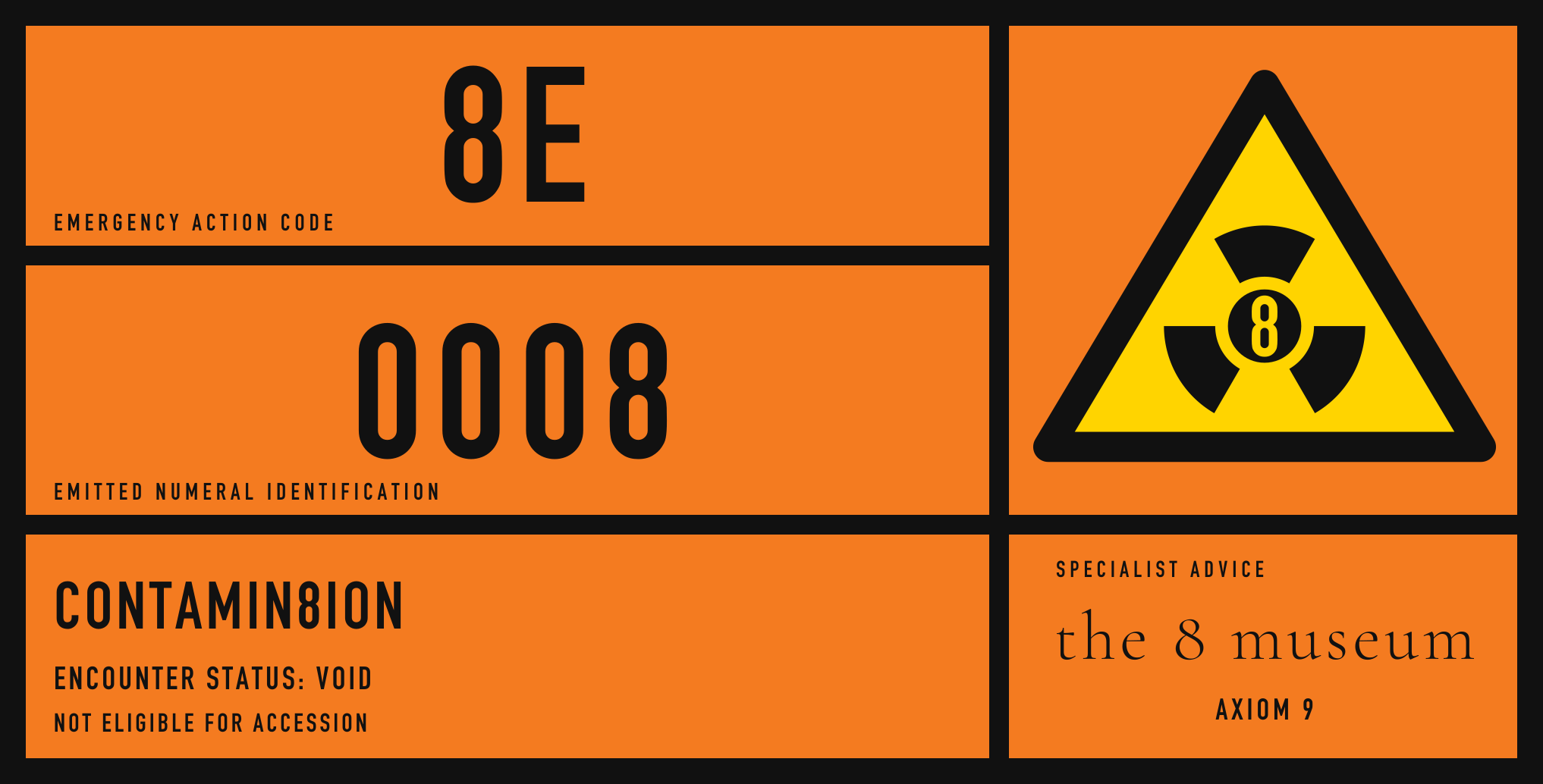
the museum's hazard placard, after the emergency-information panels carried by chemical tankers.
every 8 on it is an emission, and is void.
the problem
Every 8 in this collection has to be found. Encountered, not produced; noticed, not caused. Axiom 9 says it plainly: the 8 must not have been made by or for the practitioner.
That rule is easy to keep while the museum is invisible — one person walking, one private archive growing. But a museum that becomes visible starts emitting 8s of its own. The wordmark at the top of this page. The counter on the homepage. A book, a plaque, a poster, a press cutting. Each of these puts an 8 into the world that looks, on the surface, exactly like the 8s the practice was built to find — and is not one. It was caused, by the museum, and its provenance is contaminated by the practice itself.
At today's scale this is a curiosity. Scaled up — a world of many 8-walkers, each institution emitting into the same shared streets — it becomes a crisis: any 8 met in the wild carries a rising chance of having been planted, and found degrades from an observation into an unverifiable claim. The more legible the museum becomes, the less trustworthy the ground it collects from.
two precedents
The problem is older than the museum. Every piece of steel smelted after the atmospheric nuclear tests of 1945 carries a faint radioactive signature; instruments that need clean steel are built from metal salvaged from pre-war shipwrecks. And since generative AI began publishing at scale, the open web has ceased to be a reliably human corpus — models trained on their own outputs degrade, and the field has turned to pre-2022 text and old print books as its low-background material. The museum met the same wall, walking. Publication is its Trinity test: everything accessioned before it is beyond suspicion; everything after needs provenance management to read at all.
the placard
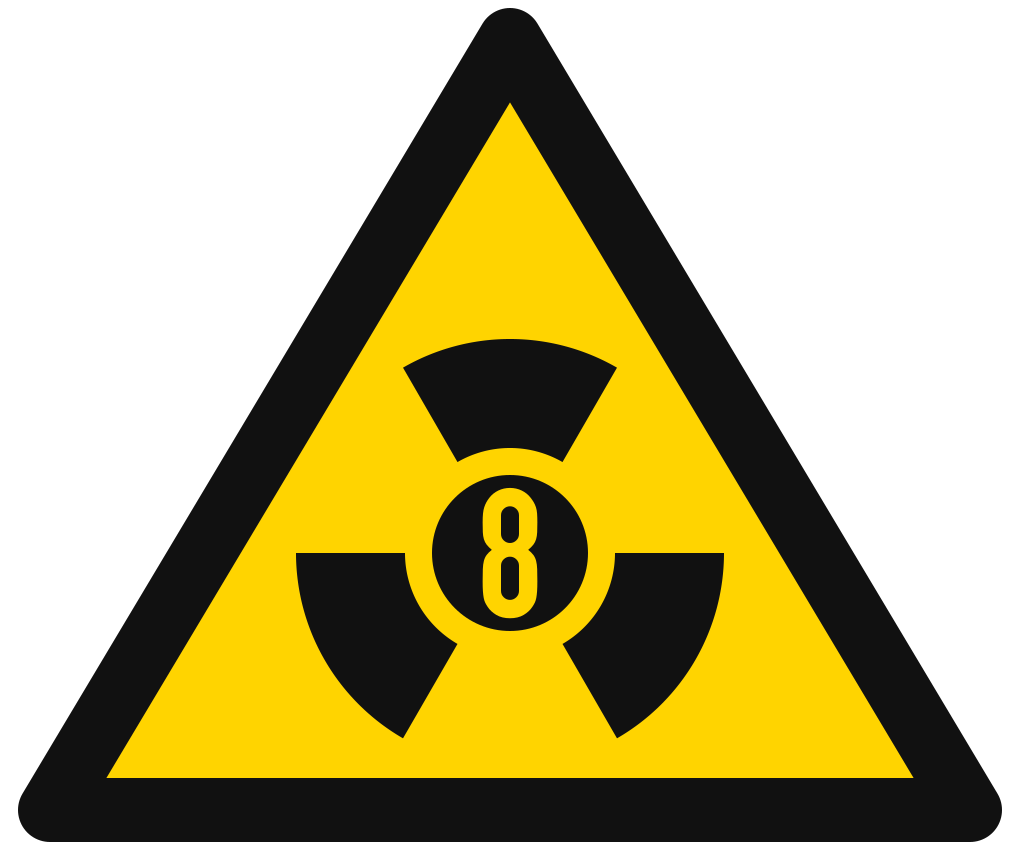
If publication is the contaminating event, the countermeasure is to make everything the institution emits announce itself as emitted. The placard above is that announcement, in the language of transport hazard signage: an emergency action code, an identification number, and a warning mark in which the 8 is the radiant source. The small version of that mark now sits in the footer of every page on this site, because every page on this site emits.
The placard is, by construction, contaminated. It carries several bare 8s of its own, and so it must — it is a warning about exactly this. Its encounter status is void. Should you meet one in the wild, it is not a find.
encounter status
void — not eligible for accession
The museum's more permanent answer is a glyph rather than a sign: otto, an 8 overprinted with a second 8 at a slight offset, to be set in place of every bare 8 the institution publishes. Two 8s in one frame breach the axioms directly, so nothing set in otto can ever re-enter the archive as a find — the museum's signature is the one 8-form it can never collect. The full account, with the questions the instrument leaves open, is Appendix F of the thesis.
The problem was raised over coffee in Paris on 18 august 2026. The name Contamin8ion, and the otto glyph, are Amber Harvie's, proposed across the same table and adopted the same afternoon. The placard followed on 3 september 2026.