
the mean photograph
every work in the collection, with nothing aligned and nothing cropped
The mean 8 is a composite of the glyphs alone: a text-detection model found the 8 in each work, which was then cropped to the glyph and scaled to a common height — and because a pale 8 and a dark one laid on top of one another simply cancel out, the pale ones were reversed to a negative so that all of them read dark on light. That last step applied to 2,158 of the 3,757: the rule, not a correction to outliers. Four decisions, each defensible, each a thumb on the scale.
This is the same collection with none of those decisions made. All 8,545 works, resized onto one canvas and averaged — no detector, no crop, no alignment, no inversion. The museum wished to know whether anything survives that, or whether the archive averages to nothing at all.
It averages to nothing at all. And then it does not.

Nothing is wrong with that plate. It is the honest average of the archive, and the archive averages to a wall in shadow. But those few levels are not noise, and the three plates below are the identical array with its narrow range opened out.
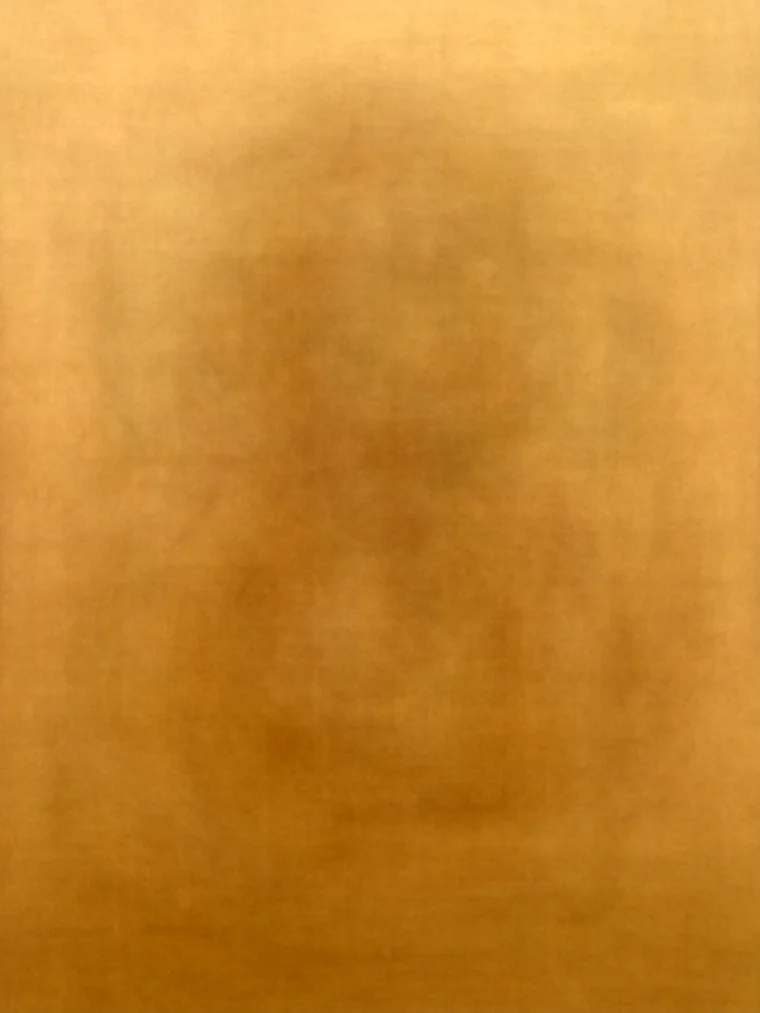 II · the mean, stretched
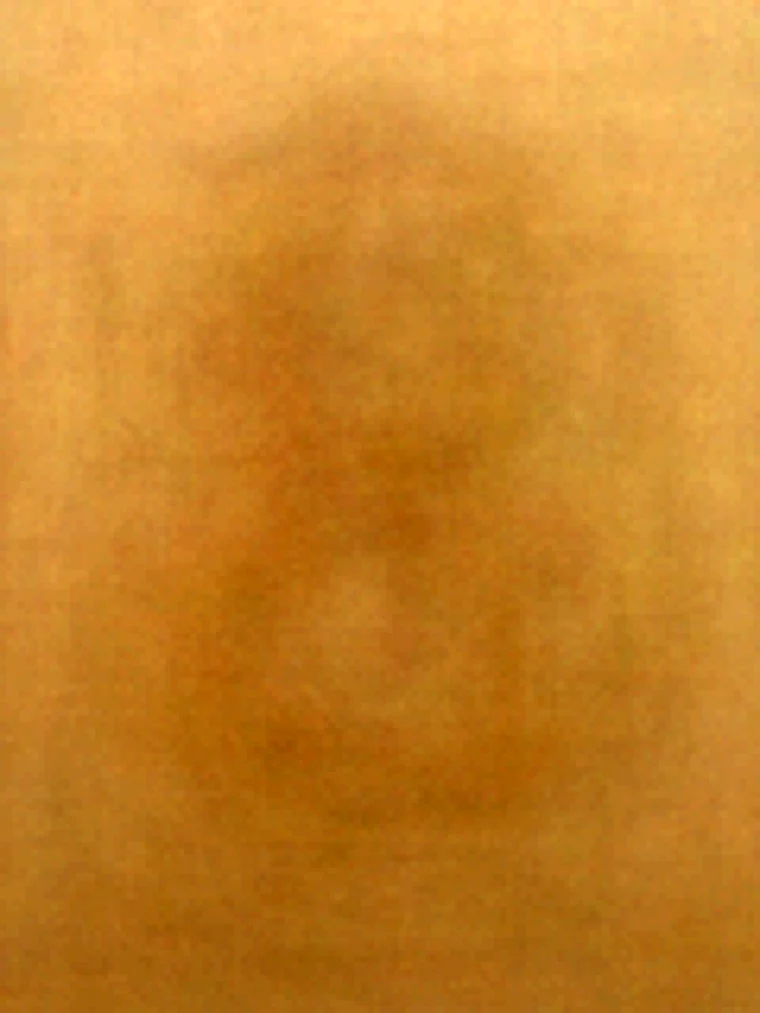 III · the median — the typical, not the average
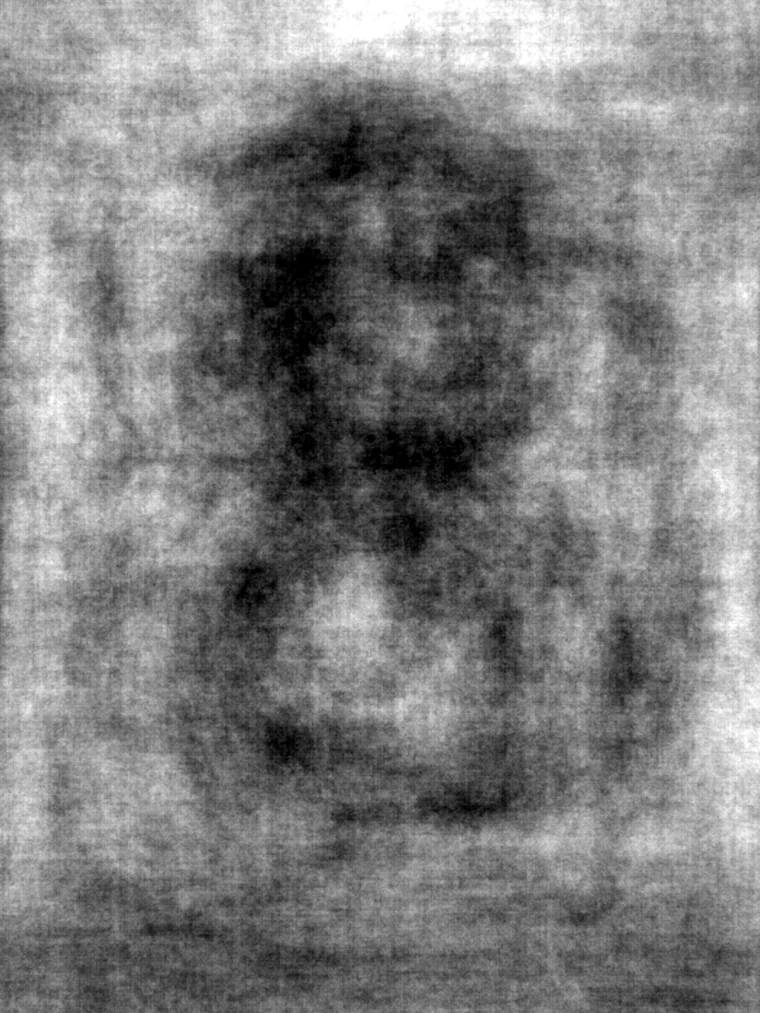 IV · with the lens gradient removed
A dark mass, centred, vertical, with the frame brighter at its edges than in its middle. Two lobes and a waist. It sits a little to the left — the same lean the committee noted on the mean 8, and declined to correct.
where the collection disagrees
the more useful question, asked the other way round
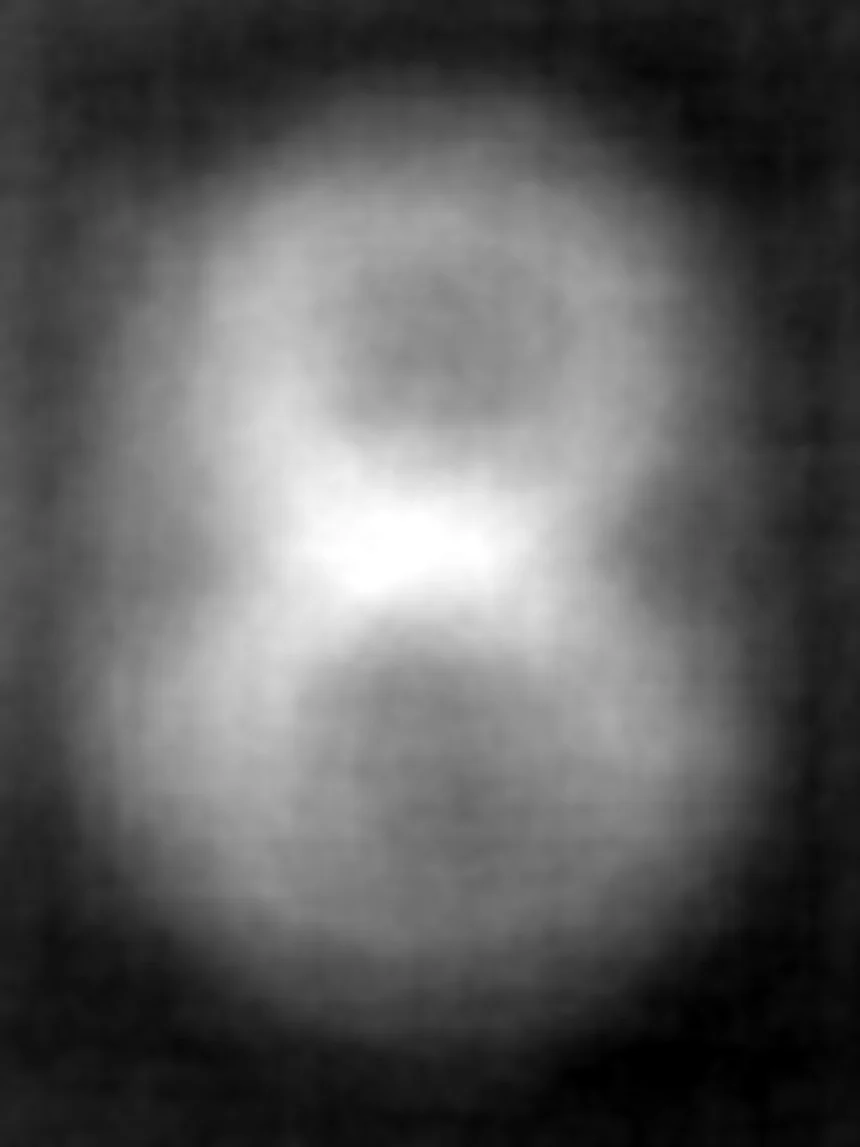
The plates above ask what the archive looks like on average. The opposite question turned out to carry more: at each point in the frame, how much do the photographs differ from one another? Sky and pavement and wall are interchangeable, so they ought to agree. Whatever the museum was actually pointed at ought not.
what the plates show
observations entered in the register
The 8 is the hole the average cannot fill. It does not appear in the mean because it is present in every frame; it appears in the variance because it is never twice the same. Across thousands of unrelated walls the background averages to a single grey. The subject refuses to.
The museum has a standing distance. An 8 is approached, faced squarely, and photographed from about as far back each time. No instruction to that effect was ever issued. The habit is legible in the arithmetic of eight and a half thousand photographs, and the practitioner was not aware of holding it.
The edges of the archive agree. Toward the border of the frame the disagreement falls away: whatever is out there — sky, road, water, rust — is interchangeable between one work and the next. The collection is a record of its margins being irrelevant.
No 8 was needed to find the 8. The mean 8 required a scene-text detector, which can be defeated by size as readily as by strangeness. This plate required nothing but subtraction. Every work is in it on the same terms, whatever the machine could or could not read.
verification
the same 8, computed from photographs that share nothing
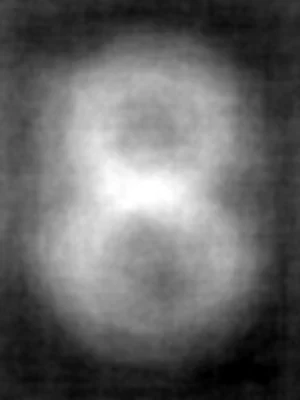
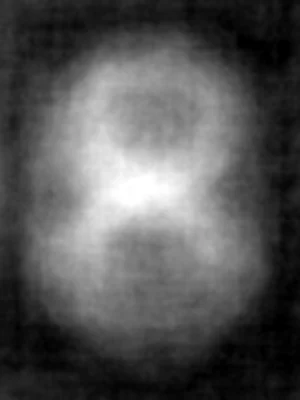
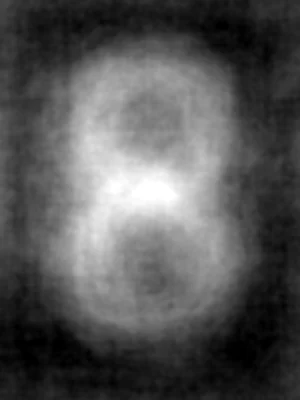
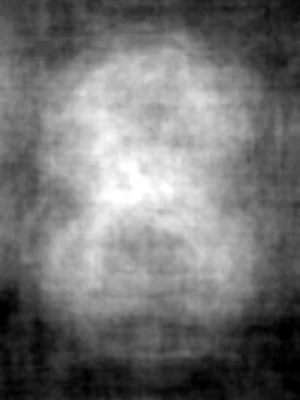
A single striking image out of a pipeline is a claim and not a finding. The collection was therefore split into groups which cannot contain the same photograph, and each group computed on its own.
 half A · 4,273
 half B · 4,272
 australia · 2,336
 italy · 1,091
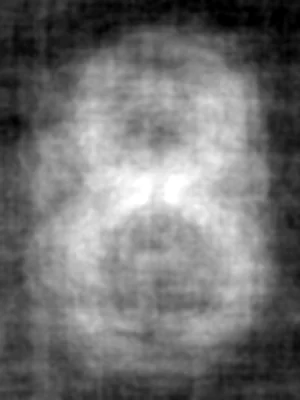 japan · 710
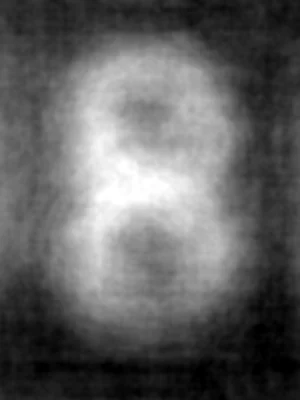 2024 · 2,070
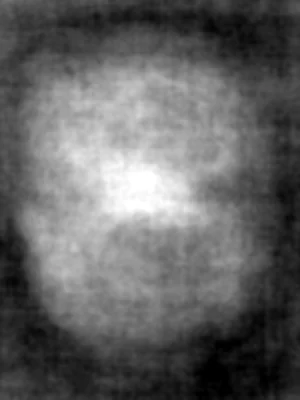 2026 · 1,700
| compared | correlation | shares no photograph because |
|---|---|---|
| half A ∼ half B | 0.9742 | alternating works, one to each side |
| first half ∼ second half | 0.9705 | split down the middle of the register |
| australia ∼ italy | 0.9071 | opposite sides of the world |
| australia ∼ japan | 0.8041 | opposite sides of the world |
| italy ∼ japan | 0.7783 | opposite sides of the world |
| 2024 ∼ 2026 | 0.9039 | two years apart |
Every subset also shows its centre disagreeing more than its edges, by between +5.2 and +6.7 levels, and never once the other way round.
the mean photograph, by country
contrast stretched; countries holding 100 works or more
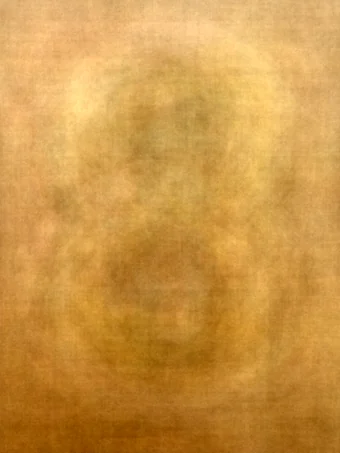 australia · 2,336
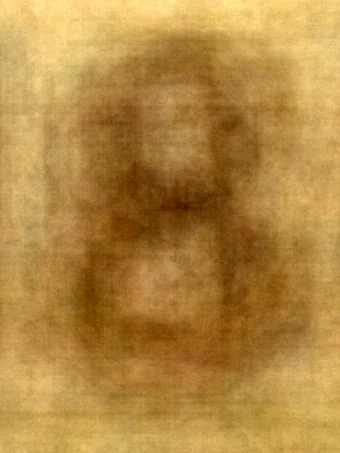 italy · 1,091
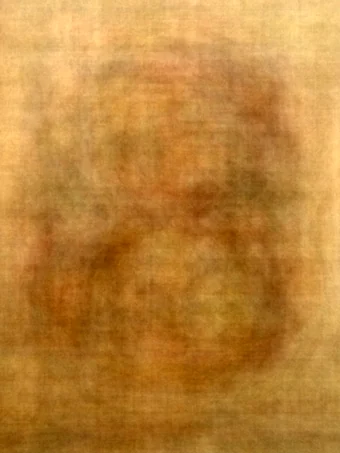 japan · 710
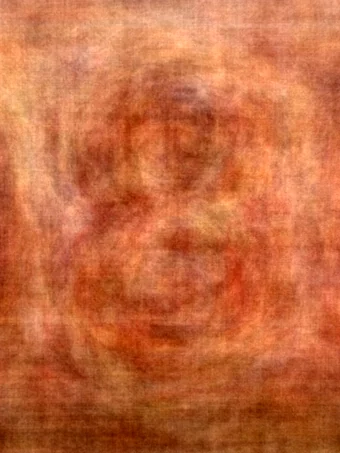 thailand · 542
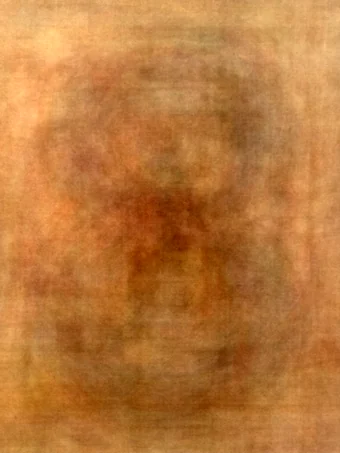 hong kong · 480
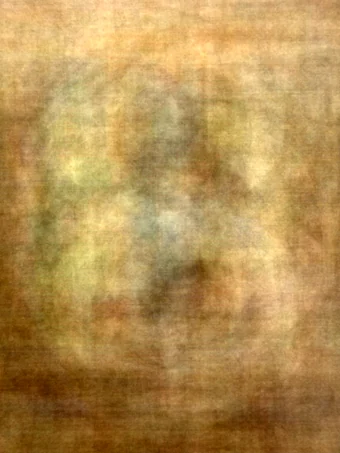 norway · 292
method
what was done, and what was deliberately not
The canvas. All but two works in the collection are portrait, and effectively all are 3:4, so each was simply resized onto one 600×800 canvas. No crop had to be chosen and nothing was rotated — with an archive this uniform, no such decision needed inventing.
Nothing normalised. No tonal reversal, no per-work exposure or white balance, no detector. Dark 8s and light 8s were allowed to cancel one another out, which is precisely why Plate I is featureless. The mean 8 takes the opposite view, and says so.
Stretching. Where a plate is described as stretched, the 0.5 and 99.5 percentiles were mapped to black and white across all three channels together, so that hue relations survive. Stretching each channel on its own would have quietly white-balanced the archive and discarded its warm cast, which is a real property of it and not an error.
One correction. An earlier Plate IV subtracted a blur of the eight-bit rendering rather than of the underlying array. The residual was smaller than one quantisation step, so opening it out amplified the eight-bit staircase into a field of contour bands which looked a great deal like a finding and was an artefact of arithmetic. The plate above is computed in floating point throughout.
The museum set out to photograph 8s and has, incidentally, produced a record of its own standing distance. The average of everything it saw is a warm grey; the shape appears only in the disagreement. The committee, shown the plate, remarked that it had expected the portrait to be of the 8.